

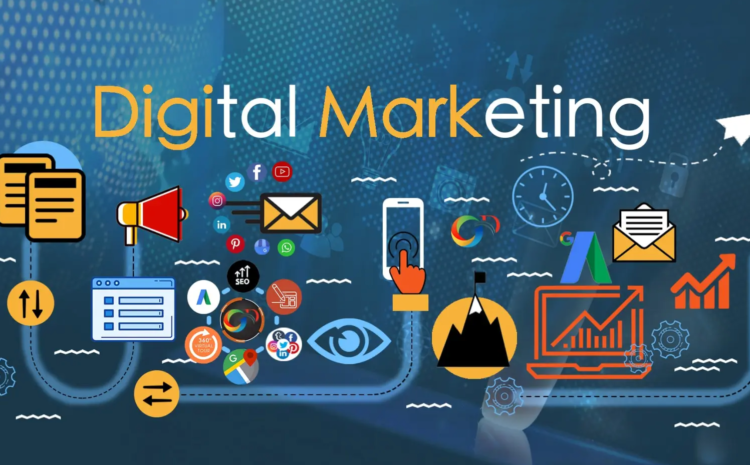
Digital Marketing in 2026: The Complete Guide to Growing Your Brand Online
The way businesses reach customers has fundamentally changed. Gone are the days when a newspaper ad or a TV commercial was enough. Today, your customers are online — scrolling social media, searching Google, watching YouTube, and reading emails. Digital marketing is how you meet them there.
Whether you’re a startup founder, a small business owner, or a marketing professional looking to sharpen your skills, this guide will walk you through every major channel, strategy, and tool shaping the digital marketing landscape in 2026.
What is digital marketing?
Digital marketing refers to any form of marketing that uses the internet or electronic devices to reach audiences. It encompasses a wide range of tactics — from appearing at the top of Google search results, to running Instagram ad campaigns, to building a newsletter that lands in thousands of inboxes every Tuesday morning.
Unlike traditional marketing, digital marketing is measurable, targetable, and often more cost-effective. You can see exactly who clicked your ad, how long they stayed on your website, and whether they made a purchase.
The core channels of digital marketing
Digital marketing isn’t a single thing — it’s a collection of channels, each with its own strengths. The best strategies combine several of these to create a cohesive presence.
SEO: The foundation of digital visibility
Search engine optimization is arguably the most important long-term investment in digital marketing. When someone searches for a product or service you offer, appearing on page one of Google can be the difference between a thriving business and an invisible one.
Modern SEO goes far beyond stuffing keywords into your content. It encompasses technical performance (site speed, mobile responsiveness), on-page content quality, E-E-A-T (Experience, Expertise, Authoritativeness, Trustworthiness), and off-page authority through backlinks.
- Research keywords your audience actually searches for using tools like Ahrefs or SEMrush
- Write content that fully answers the searcher’s question — not just content that mentions keywords
- Optimize your page speed; Google uses Core Web Vitals as a ranking signal
- Build backlinks by creating shareable content and reaching out for guest posting opportunities
Social media: Building community, not just followers
Social media platforms give brands a direct line to their audience — but the rules have changed. Simply posting promotional content no longer works. Today’s social media success comes from showing up authentically, providing genuine value, and participating in conversations.
The platform you focus on matters. LinkedIn works well for B2B brands and professional services. Instagram and TikTok dominate for visual and lifestyle brands. Pinterest drives high-intent traffic for home, food, and fashion niches. X (formerly Twitter) remains powerful for tech, finance, and thought leadership.
Email marketing: Your most valuable asset
If you could only choose one digital marketing channel to invest in, most experienced marketers would say: build your email list. Unlike social media followers — which are rented audiences on someone else’s platform — your email list belongs to you.
Email marketing generates an average return of $36–$42 for every $1 spent, making it the highest-ROI channel in digital marketing. The key is to treat your subscribers with respect: provide consistent value, segment your audience, and personalize your messaging.
- Offer a compelling lead magnet (free guide, checklist, mini-course) to grow your list
- Set up automated welcome sequences for new subscribers
- Segment your list by behavior, interests, or purchase history
- A/B test subject lines to improve open rates over time
Content marketing: Play the long game
Content marketing is the practice of creating useful, relevant content to attract and retain a clearly defined audience. A well-executed content strategy positions your brand as the go-to authority in your niche — which drives organic traffic, builds trust, and supports every other marketing channel.
The best content answers real questions your customers have. Blog posts that solve specific problems, YouTube tutorials that demonstrate your expertise, podcasts that explore your industry’s biggest challenges — all of these create touchpoints that bring people into your world long before they’re ready to buy.
The role of AI in digital marketing
Artificial intelligence has reshaped digital marketing faster than almost any previous technology shift. In 2026, AI is no longer a competitive advantage — it’s table stakes. Marketers use AI to generate content drafts, personalize email campaigns, analyze customer data, optimize ad bids in real time, and forecast campaign performance.
That said, the brands winning with AI aren’t those using it to replace human creativity — they’re using it to amplify it. AI handles the repetitive, data-heavy work so that marketers can focus on strategy, storytelling, and genuine connection.
Building your digital marketing strategy
A successful digital marketing strategy isn’t about doing everything — it’s about doing the right things for your specific audience and goals. Here’s a simple framework to get started:
- Define your audience clearly: who are they, where do they spend time online, what problems do they have?
- Set measurable goals: traffic, leads, conversions, revenue — pick metrics that matter to your business
- Choose 1–2 core channels to master before expanding
- Create a content calendar and commit to consistency
- Measure results monthly, identify what’s working, and double down on it
Digital marketing is not a sprint — it’s a compounding investment. The brands that win are those that show up consistently, provide genuine value, and adapt as the landscape evolves. Start where you are, focus on one channel, and build from there.



Write a Comment